Sorry, but your comment re. Merlin engine availability makes no sense. Belgium produced the Hurricane under license and fitted them with Merlins imported from Britain. Why could they not have powered an identical number of R-38s with exactly the same engines instead of producing the Hurricanes?
lxbfYeaa, e-mail, 07.11.2025 03:01
20
ubaTaeCJ, e-mail, 21.02.2025 18:59
20
ubaTaeCJ, e-mail, 21.02.2025 15:48
20
Robert Willis, e-mail, 24.08.2020 02:03
Prior to the German attack on France, the British wasted many hundreds of Merlin engines building the near useless Fairey Battle light bomber. If, by mid 1938, agreements had been made through the Joint Anglo-French Purchasing Commission to acquire on a monthly basis Wright Cyclones to power Short Sunderlands & Empires, as well as P&W Twin Wasps to power Wellingtons; such measures could have freed up enough Pegasus engines to power roughly 225 additional Hampdens. These Hampdens could have been built at the Austin shadow factory in place of the first 450 Battles prior to May 10, 1940. The American engines could have been delivered to Britain instead of being used to build the Martin 167s & Douglas DB7s foolishly ordered by France; the vast majority of which ended up being embargoed; thus delaying their delivery until it was far too late. In summary, some 450 Renard R-38s could have been delivered (most of which could have been produced by SNCAN) to the French Air Force between April 1939 & June 1940 if the Allies had coordinated their aircraft production programmes.
Klaatu83, e-mail, 05.08.2015 17:45
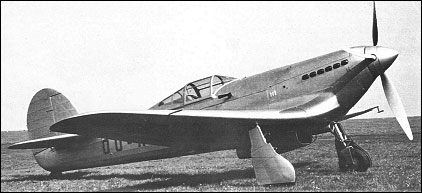
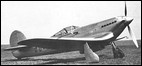
Three prototypes of this fighter were built, one with an Hispano-Suiza engine, one with a Gnome-Rhone air-cooled radial engine, and one with a British Rolls-Royce Merlin engine (shown here). None of them went into production, since the Belgians decided to order Hawker Hurricanes instead. Even if this fighter had been chosen for production, it seems doubtful that either the French or the British would have been able to spare enough engines for export to Belgium to complete them. After WW-II began in 1939 these aircraft engines were in great demand in both countries.
Géonet Michel, e-mail, 19.11.2013 12:11
Paul Burniat, Chief-Pilot at the SABCA (constructor), flew the plane during the tests. The first flight was the 4th of augustus 1938 at Evere. Paul Burniat said : "The flight capabilities and performance of this plane place it between the Hurricane and the Spitfire».
As the R-36, the R-38 was very easy to construct and the cost of the plane (without motor) was only half of the Spitfire
Immatriculé OO-ATK le 22 juin 1939 sous le numéro 473, il fut présenté aux autorités belges le 18 juillet.
Raf2889, e-mail, 05.11.2013 07:59
beautiful aircraft shame it got scrapped.
guba, 18.06.2011 11:26
Belgian resistance became inevitable, but was scrapped after capture in France by German forces.
rafa, e-mail, 31.10.2008 23:07
that's the most beautifuls fighter that i saw
Fatal error: Uncaught Error: Undefined constant "isMob" in /data03/virt15346/domeenid/www.aviastar.org/htdocs/comments/comments.php:165
Stack trace:
#0 {main}
thrown in /data03/virt15346/domeenid/www.aviastar.org/htdocs/comments/comments.php on line 165