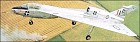
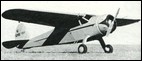
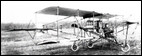
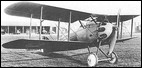
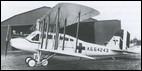
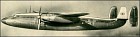
It should be noted that Canadian Car and foundry also manufactured many aircraft under license. Among those were 52 Grumman G-23 Goblin fighters, over 1400 Hawker Hurricane fighters, over 800 Curtiss Helldiver carrier-based dive bombers and over 550 North American T-6 Harvard trainers. In addition, in 1944 the company also built the sole prototype of Vincent Burnelli's unique CBY-3 Loadmaster lifting-body transport plane, which is currently under restoration at the New England Air Museum at Windsor Locks, Connecticut.
a.machiaverna, e-mail, 01.10.2011 23:14
looks clean, sturdy, reminescent of the pt-17. Any performance figures available?
reg saretsky, e-mail, 24.03.2009 18:58
copied from wikipedia< appears to be the same aircraft:
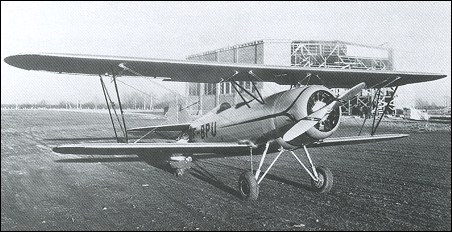
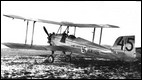
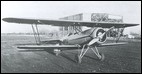
The Maple Leaf Trainer II was a Canadian biplane trainer designed by Elsie MacGill in 1938 and manufactured by the Canadian Car and Foundry. Although it was intended for use as a basic trainer for the Royal Canadian Air Force, it was rejected and the only two completed airframes were sold to Mexico.
[edit] Design and development In 1937, Canadian Car and Foundry had obtained rights to a training aircraft designed by Leland Stamford Wallace known as the "Wallace Trainer." The nearly-complete project was a conventional biplane with two open cockpits, powered by a Kinner B-5 engine. Featuring welded steel-tube fuselage, ailerons and tail with a wing structure utilizing spruce spars and ribs, the entire aircraft was fabric covered, except for aluminium panelled cockpit and engine areas. Canadian Car and Foundry renamed the project the Maple Leaf I.
Once the Maple Leaf I was completed, it was tested in 1938 with the Nicaraguan identification GN-3, with the anticipation of an order for ten to twelve production models. The preliminary flight test results were not positive and the project was wound up in 1939, citing unsatisfactory performance.
In 1938, the new Chief Designer Elsie McGill began work on the Maple Leaf II, which, except for the use of the fin and rudder from the earlier aircraft, was a new design. A conventional structure based on welded steel tube fuselage and steel-tube tail, aluminium alloy ribs with wooden wings was employed. Designed around British design requirements for strength, the Maple Leaf II was intended to be fully aerobatic. In order to expedite development and to ensure no interruption in the ongoing Hawker Hurricane production lines, a number of components were "farmed out" to sub-contractors[1].
[edit] Operational history The Maple Leaf II prototype was ready for flight testing in October 1939; one of the unusual aspects of the program was that the designer accompanied company Sales Manager O.C.S. Wallace who acted as a test pilot on the first flight, 31 October 1939. Tests indicated excellent results with stable and docile flight characteristics, however, the RCAF test pilots felt that a basic trainer had to be more challenging.
After evaluation by the RCAF and the Department of Transport in 1940, the Maple Leaf II was exported to Mexico via Port Washington on Long Island, USA. Along with the finished prototype, two semi-complete airframes with blueprints, jigs, tools and all accessories were sold to the Mexican Air Force school (EMA). One of the "kit" aircraft was assembled and flown as the Ares 2. It differed slightly from the Maple Leaf II in having enlarged vertical tail surfaces and an uncowled engine.
In total, 10 units were built in Mexico during 1940, are were equipped with the Warner Super Scarab 165 hp engine.[2]
Fatal error: Uncaught Error: Undefined constant "isMob" in /data03/virt15346/domeenid/www.aviastar.org/htdocs/comments/comments.php:165
Stack trace:
#0 {main}
thrown in /data03/virt15346/domeenid/www.aviastar.org/htdocs/comments/comments.php on line 165