|
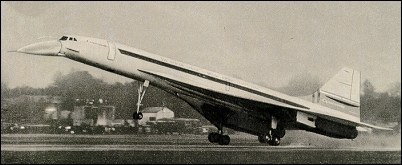
| The French-built prototype Concorde 001 flew on March 2, 1969 and the British-made Concorde 002 flew on April 9, 1969.
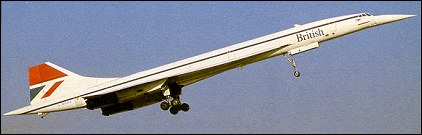
Both prototypes entered service in 1971. Commercial service began in 1976 but only 9 aircraft were ordered.
| CREW | 3-4 |
| PASSENGERS | 144 |
| ENGINE | 4 x Rolls-Royce/SNECMA Olympus 593 Mk 610, 169.1kN |
| WEIGHTS |
| Take-off weight | 185066 kg | 408003 lb |
| Empty weight | 78698 kg | 173500 lb |
| DIMENSIONS |
| Wingspan | 25.55 m | 84 ft 10 in |
| Length | 62.10 m | 204 ft 9 in |
| Height | 11.40 m | 37 ft 5 in |
| Wing area | 358.22 m2 | 3855.84 sq ft |
| PERFORMANCE |
| Cruise speed | 2179 km/h | 1354 mph |
| Ceiling | 18290 m | 60000 ft |
| Range | 6582 km | 4090 miles |
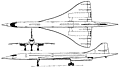 | A three-view drawing (1190 x 668) |
| leo rudnicki, e-mail, 24.04.2009 03:32 There was a bad movie and all I remember was that an F4 couldn't catch Concorde. A single Concorde pilot probably had more Mach 1+ time than all the fighter pilots in history. I only remember one crash, caused by FOD. Wish I had flown in one but champagne tickles my nose. reply | | Ian, e-mail, 22.04.2009 13:56 I remember the supersonic boom from this bird when it flew over. Regular as clockwork.
Excellent achievement but not financially viable for larger scale use. The crashes sealed its fate. reply |
|
Do you have any comments?
|
| 
All the World's Rotorcraft |




20
reply